Building an inclusive equestrian community
Anyone can be involved with horses – it's a big part of what makes our equestrian community so incredible.
Building on the federation’s Horses For All commitments, these videos have been designed to help you feel more confident in embracing differences, making newcomers feel welcome and supporting the varied needs of all participants.
These videos are here to help you:
- build your understanding and feel confident in embracing differences
- make newcomers feel welcome and build a community where everyone feels respected and valued
- prepare yourself before joining courses or events
- encourage friends and fellow participants to create a supportive environment.
In building a welcoming and accessible equestrian community, we must look proactively and holistically at how we can plan and engage with everyone in mind.
The first step is to develop our understanding. Educating ourselves and those around us means we can have a bit of knowledge to support decision-making and ensure everyone feels welcome in our equestrian spaces.
Together, we can build an equestrian community where everyone feels valued, safe, and has a strong sense of belonging.
Our five bite-sized animations cover the following topics:
- Introduction to EDI
- Planning with everyone in mind
- Banter and microaggressions
- Active bystander and allyship
- Anti-racism
Within each topic, you’ll be guided through three areas:
- Recognise: Understand the subject and begin identifying the signs or gaps in your service.
- Reflect: Learn how you can have a positive impact by resolving or responding to issues within this subject.
- Reframe: As we bring the journey to a close, we highlight the benefits for everyone and how our new practices help everyone feel welcome and included.
Introduction to EDI
- Equity ensures everyone receives the support they need to access the same opportunities.
- Diversity celebrates who we are as individuals.
- Inclusion creates belonging, where everyone feels valued, respected, and able to thrive.
Sometimes, you may see equality mentioned within EDI. Equality is to have the same status, rights and responsibilities for all the members of a society or group.
Together, these principles form the foundations of a welcoming equestrian community. A place where we support each other and proactively engage with the community around us.

Planning with everyone in mind
Planning with everyone in mind ensures that equestrian spaces, activities and communications are accessible to everyone, regardless of age, ethnicity, gender, disability or background.
By considering a diverse range of needs from the very beginning, we can reduce barriers to participation by designing more flexible experiences and creating opportunities that work for all.
Banter and microaggressions
Banter – light, playful and joking conversation.
Microagression – a small comment or action that unintentionally offends or hurts someone, often because of their identity.
Banter can be light-hearted and fun, but when jokes isolate or offend, they cross a line into discrimination. Subtle comments or actions that demean someone’s identity, known as microaggressions, can have a lasting negative impact.
Active bystander and allyship
Active bystander – someone who takes action to challenge discriminatory behaviour and support those affected.
As an active bystander, you can show support by speaking up, offering help or leading by example, all play a vital role in building allyship.
Anti-racism
Anti-racist – actively fighting against racism and unfair treatment.
Talking about racism can be uncomfortable, but to move forward, we must go beyond simply saying we are “not racist” and take active steps to be anti-racist. This means recognising where racism exists within ourselves and our surrounding communities, and challenging it in our behaviours and policies.
Thank you to Tinmouse for creating our animation series, commissioned through investment from Sport England and The Worshipful Company of Saddlers.
What now?
.png)
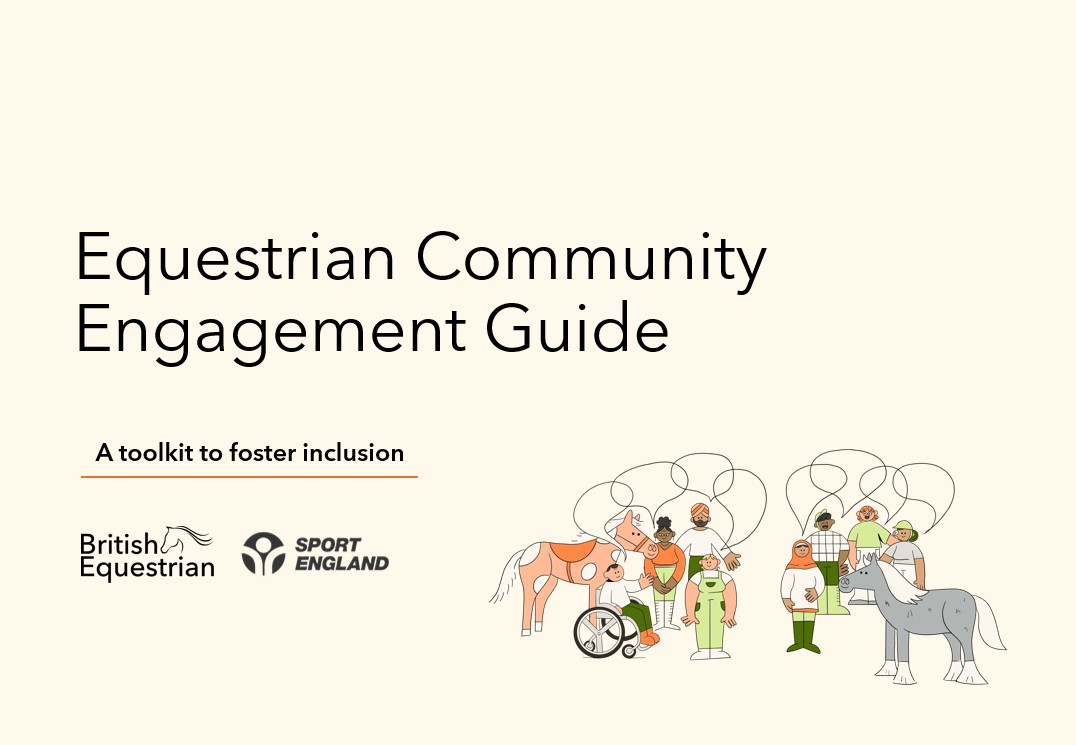
Community Engagement Guide
Our Equestrian Community Engagement Guide includes a self-led toolkit and action plan to help embed EDI in your centre and effectively embed the Horses For All Strategy values.
Qualifications
There are qualifications you can take to help develop your skills in being inclusive:
BHS Coaching4All qualification
- Gain confidence in supporting a range of clients in your coaching. This is a thought-provoking and interactive course offering opportunities to practice and develop your understanding to plan and deliver an inclusive coaching environment.
- E-learning includes a range of topics such as inclusive activity, mental health awareness, tackling racism in sport and more.
Courses
Riding for the Disabled Association (RDA) Disability Awareness
- Available on the RDA e-learnng platform, a great place to begin your next steps by increasing your knowledge of supporting disabled people.
- Offers a range of materials and courses to help organisations, including equestrian centres, run safely and inclusively. They cover volunteer recruitment and retention, safeguarding, health and safety, governance, EDI guidance and planning tools.
Making your centre a space for all
Think about how to make your centre more inclusive and accessible; you may already do a lot. Why not highlight to members or on social media and encourage others to get involved?
Our mental health toolkit supports you and your centre to be confident in helping those struggling with mental health.
If you feel affected by any of the situations described, or would like to learn more about safeguarding. you report a concern on our Safe to Play website.