Introduction to coaching
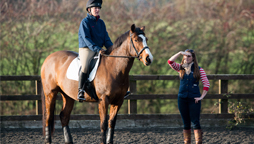
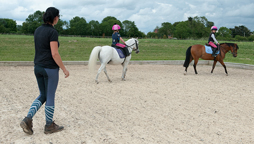
Coaching is a vital part of the equestrian industry. At British Equestrian, we work with our member bodies to support coaches at every stage of the journey, with a range of initiatives to help you progress and develop.
Much of this work is delivered by the Coach Development Action Team (CDAT), which brings together coaching leads from across our member bodies. We also work closely with UK Coaching to offer additional resources and opportunities for coaches.
We use the term 'coaching' to cover teaching, instructing, training and all methods of helping a rider, carriage driver, vaulter, or horse/rider partnership. We believe promoting high quality coaching is both a privilege and responsibility of everyone involved in our sector.
The coaching pathway
We and our member bodies encourage anyone who coaches, or wants to become a coach, to gain a recognised qualification. The process and the learning not only builds your knowledge and confidence, but also helps ensure your coaching practice is safe and rewarding for everyone involved.
By developing your skills in this way, you can support better outcomes for both human and equine athletes, creating positive and progressive experiences in every session.
There are three pathways you can choose from to become a qualified equestrian coach...
- Equestrian Coaching Certificate
- British Horse Society (BHS) pathway
- RDA Coaching pathway
Equestrian Coaching Certificate
The Equestrian Coaching Certificate is the recognised coaching pathway used by most equestrian member bodies. It's part of the wider coaching framework awarded by 1st4Sport and recognised by UK Coaching.
In 2026, the coaching pathway was reviewed by the Federation’s Coaching Development Action Team and Qualifications Development Group to make the journey into coaching clearer and more straightforward.
The updated pathway has two parts:
- Core Equestrian Coaching Certificate – covering the essential coaching skills and knowledge that apply across all areas of equestrian sport.
- Technical Certificate – focusing on the specific skills and knowledge needed for each discipline, developed by the relevant Member Body.
Coaches are required to complete both the Core Equestrian Coaching Certificate and the relevant Technical Certificate to become qualified.
This approach makes it easier for coaches to begin their coaching journey and supports progression between different equestrian disciplines by recognising the skills and knowledge they have in common.
The qualification pathway continues to be awarded through UK Coaching and 1st4sport.
Principles of the Equestrian Coaching Certificate
- Puts riders/drivers and equines at the heart of what we do.
- Provides a flexible qualification for all, in all coaching environments.
- Provides technical coaching pathways for riding and driving and equestrian sport-specific pathways.
- Aspiring coaches can be assured of a standardised qualification.
What’s expected at each Coaching Certificate Level?
- The role of the Level 1 coach is to: 'Assist more qualified coaches by delivering aspects of coaching sessions, normally under direct supervision'
- The role of the Level 2 coach is to: 'Prepare for, deliver and review coaching sessions'
- The role of the Level 3 coach is to: 'Plan, implement, analyse and revise annual coaching programmes'
- A Level 4 coach is a beacon high-performing coach for their participant group, i.e.
- Riders up to the age of 12 of all abilities
- Teenagers of all abilities
- Adult participation riders over the age of 18 of all abilities
- Adult competitive riders who are over the age of 18, with a focus on being competitive against others. These riders will train with the aim of competing successfully and moving up the levels.
- Performance development riders who are identified for the talent pathway programme and squads working towards senior high-performance
- High-performance riders who are selected to represent their country
NB. When we use the terms ‘riders’ or ‘riding’, it includes carriage-driving activity.
All four levels of the Equestrian Coaching Certificate comprise of a number of days of taught content, followed by formal assessment. To find out more about each of the individual levels that make up the Certificate in Equestrian Coaching, click here.
BHS Pathway
BHS provides a structured education and qualification pathway for equestrians of all ages and abilities. It supports both professional and recreational riders, focusing on practical skills across horse care, equitation, stable management and coaching. This pathway supports the fundamental skills required to coach both entry level and professional competitive equestrians and care and management and riding. You will learn practical, real-world skills within a structured platform to support you along your journey.
BHS qualifications are designed to develop a well-rounded understanding of the horse by combining:
- Horse care and management
- Riding skills
- Lungeing
- Coaching
This approach encourages a broad understanding of horse and rider partnerships, including key factors such as tack, nutrition, behaviour and overall management.
Progression at each stage is supported, beginning with Stage 1 (Care and Ride). Coaching is introduced at Stage 2, with further development through Stages 3 and 4. Each level builds on prior knowledge and experience within a structured framework.
BHS Stage 2, 3 and 4 qualifications sit on the Regulated Qualifications Framework (RQF), are awarded by British Horse Society Qualifications (BHSQ) and are regulated across England, Scotland, Wales and Northern Ireland They are also recognised by the International Group for Equestrian Qualifications (IGEQ), supporting wider international recognition.
A milestone achievement is the Stage 3 in Complete Horsemanship because this qualification allows you to join the BHS Accredited Professional Coach (APC) scheme. As an APC you will have access to benefits such as branded clothing, an online business toolkit, first aid and safeguarding courses, access to an exclusive online professional community with free business support and resources, and the option to take out Public Liability insurance for the duration of your membership.
You can continue to progress after Stage 3 right through to the BHS Fellowship. BHS Fellows are renowned throughout the global equine industry as ambassadors for the equestrian profession and are leading coaches in their field.
For more information on the BHS Coach in Complete Horsemanship, or the other career pathways that BHS can support, click here.
RDA Pathway
The RDA Coaching Pathway offers a structured route to becoming an RDA coach, supporting disabled participants to develop confidence, independence and wellbeing through horses.
Open to a wide range of backgrounds, the pathway combines practical experience with formal training to develop safe, effective and participant-centred coaching.
The pathway progresses from initial volunteer and Green Card training through four coaching levels:
- Coach in Training
- Group Coach
- Coach Certificate
- Advanced Coach Certificate
At each stage, coaches complete a blend of theory and practical modules, including coaching practice, equine knowledge, safeguarding, and therapy/medical understanding. Delivery is flexible, with modular training designed to fit alongside volunteering and coaching commitments.
Assessment at each level ensures coaches can confidently plan and deliver sessions within an RDA environment.
The RDA pathway aligns with wider equestrian coaching frameworks, including the Equestrian Coaching Certificate and British Horse Society qualifications, supporting progression and recognition of prior learning.
For more information on becoming an RDA Coach, click here.